Bank Reconciliation
- Home
- Bank Reconciliation


Bank Reconciliation
Ensure financial accuracy and control with Zeweb Media’s professional Bank Reconciliation services designed to match your records with bank statements seamlessly. Our experts identify discrepancies, prevent errors, and provide clear insights into your cash position, helping your business maintain transparency, compliance, and informed decision-making.
Request A Quote

+1 315-284-1171
info@zewebmedia.com
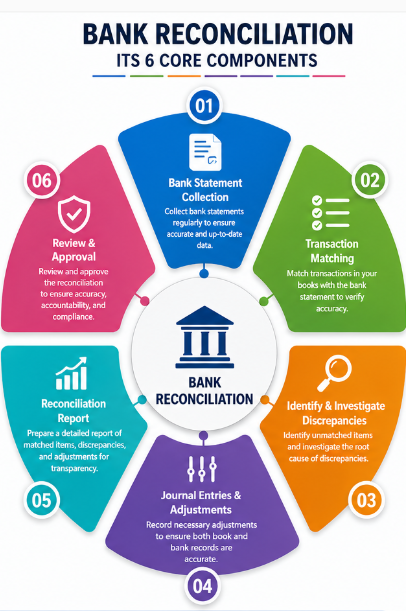
Core Components of Bank Reconciliation
Bank Statement Collection:
Regularly collecting bank statements ensures access to accurate and up-to-date financial data. This is the first step in the reconciliation process, enabling businesses to compare internal records with bank transactions effectively.
Transaction Matching:
Transaction matching involves comparing entries in your accounting records with bank statements. This helps verify accuracy, ensure completeness, and quickly identify any mismatches or missing transactions.
Identify & Investigate Discrepancies:
This step focuses on detecting differences such as missing entries, duplicate transactions, or timing issues. Investigating these discrepancies helps maintain accurate records and prevents potential financial errors or fraud.
Journal Entries & Adjustments:
Necessary corrections are recorded through journal entries to align company records with bank data. This ensures both sets of records reflect the true financial position of the business.
Reconciliation Report Preparation:
A detailed reconciliation report summarizes matched transactions, discrepancies, and adjustments. It provides transparency, supports audits, and offers a clear overview of financial accuracy.
Review & Approval:
Final review and approval ensure the reconciliation process is accurate and compliant with internal controls. This step strengthens accountability and confirms that all discrepancies have been properly addressed.
Do You Have Any Questions?
Bank reconciliation is the process of comparing a company’s financial records with its bank statements to ensure accuracy, identify discrepancies, and maintain up-to-date financial information.
Most businesses perform bank reconciliation monthly, but high-volume organizations may do it weekly or daily to maintain tighter financial control and quickly detect discrepancies.
It helps detect errors, prevent fraud, ensure accurate financial reporting, and provide better visibility into cash flow, enabling more informed business decisions.
Common causes include timing differences, bank fees, unrecorded transactions, duplicate entries, or human errors during data entry and recording.
Yes, modern accounting software automates transaction matching, imports bank data, and flags discrepancies, making the process faster, more accurate, and less prone to manual errors.
Call Now