Inventory Management
- Home
- Inventory Management


Inventory Management
Optimize your stock control with Zeweb Media’s Inventory Management services designed to improve accuracy, reduce costs, and streamline operations. Our experts track inventory levels, manage stock movement, and ensure real-time visibility, helping businesses avoid stockouts, minimize excess inventory, and make smarter purchasing and sales decisions.
Request A Quote

+1 315-284-1171
info@zewebmedia.com
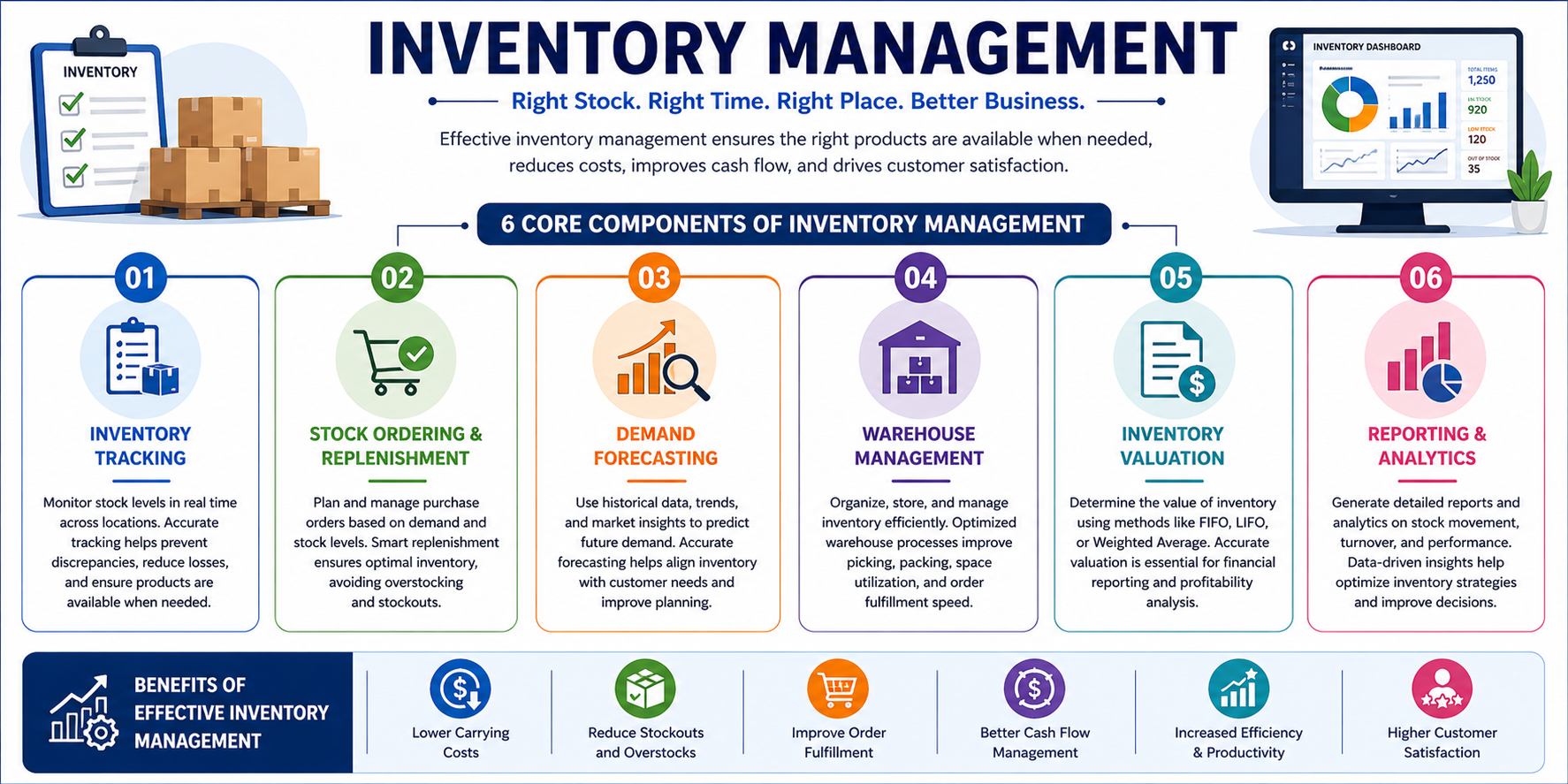
Core Components of Inventory Management
Inventory Tracking:
Inventory tracking monitors stock levels in real time across locations. It helps businesses maintain accurate records, prevent stock discrepancies, and ensure products are available when needed.
Stock Ordering & Replenishment:
This involves planning and managing purchase orders based on demand forecasts and stock levels. Efficient replenishment ensures optimal inventory levels, avoiding both overstocking and stockouts.
Demand Forecasting:
Demand forecasting uses historical data and market trends to predict future sales. Accurate forecasting helps businesses plan inventory effectively and align supply with customer demand.
Warehouse Management:
Warehouse management focuses on organizing, storing, and handling inventory efficiently. It improves picking, packing, and storage processes, ensuring faster order fulfillment and reduced operational costs.
Inventory Valuation:
Inventory valuation determines the financial value of stock using methods like FIFO, LIFO, or weighted average. It is essential for accurate financial reporting and profitability analysis.
Reporting & Analytics:
Inventory reports and analytics provide insights into stock movement, turnover rates, and performance. These insights help businesses optimize inventory strategies and improve decision-making.
Do You Have Any Questions?
Inventory management is the process of tracking, storing, and controlling stock to ensure the right products are available at the right time while minimizing costs and waste.
It helps maintain optimal stock levels, reduces carrying costs, prevents stockouts, and improves overall operational efficiency and customer satisfaction.
Common techniques include FIFO, LIFO, Just-in-Time (JIT), and ABC analysis, each helping businesses manage stock efficiently based on demand and value.
Yes, modern inventory systems automate tracking, ordering, and reporting, improving accuracy, saving time, and reducing manual errors.
Retail, e-commerce, manufacturing, and logistics businesses benefit the most, as they rely heavily on efficient stock control and supply chain management.
Call Now