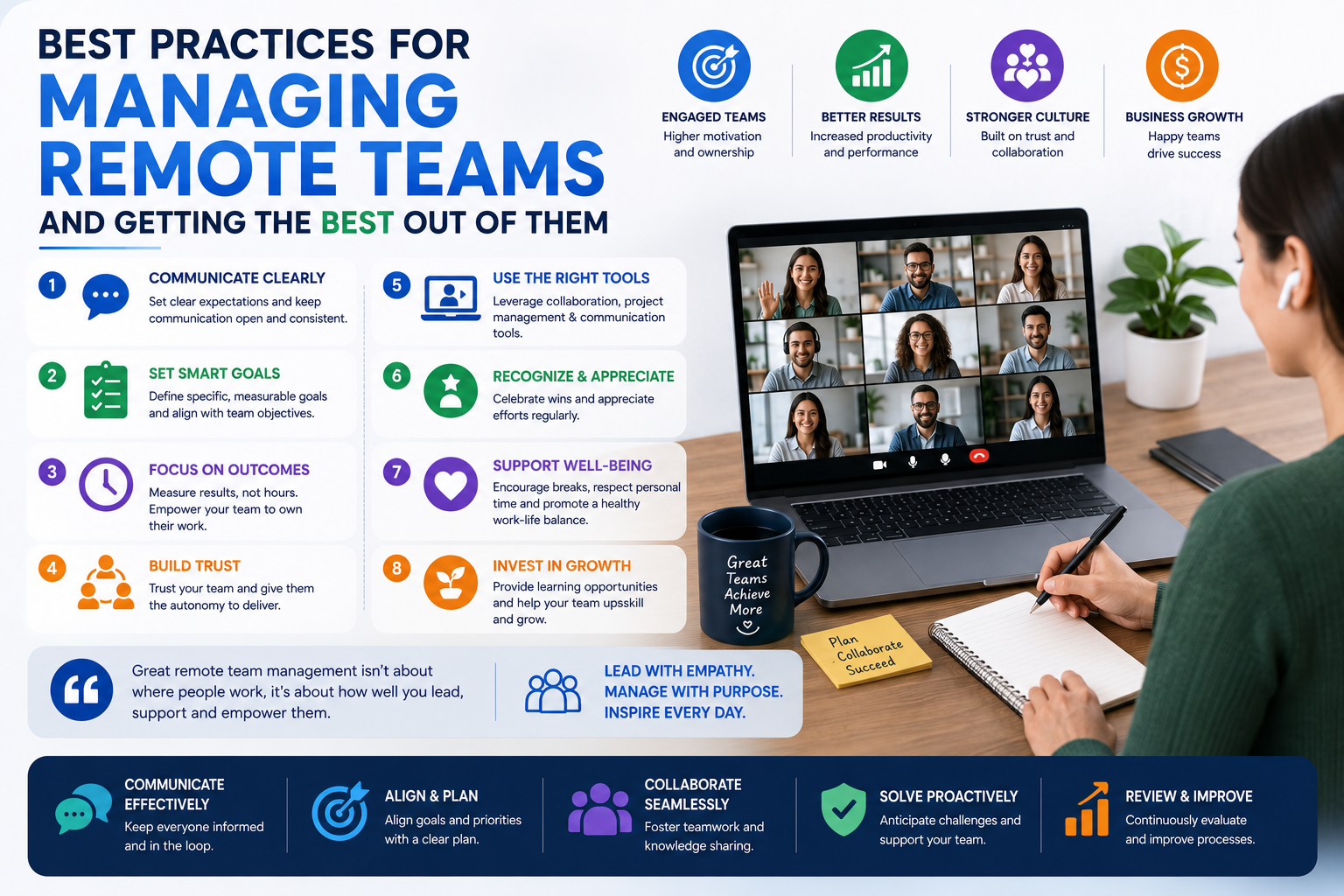
Remote work has been on the rise since COVID-19, but it’s not a new concept. In fact, before the pandemic, almost one in four people in the U.S. workforce had worked remotely, according to Forbes. Since then, the trend has continued, with McKinsey predicting that 20% to 25% of employees in developed countries will work remotely post-pandemic. Managing remote employees is no easy task, that is why you must master effective remote management practices to succeed in today’s evolving work environment. Let’s dive into the best practices for managing remote teams.
Remote Workers vs. Outsourcing
There’s often confusion between remote working and outsourcing. While they share similarities, there are two key differences: structure and management.
Outsourcing typically involves a third party, with contractors or vendors operating independently. These workers are often supervised by their own local teams. Remote workers, however, are integrated into the company’s organizational structure, working similarly to in-house employees but from different locations.
Understanding these differences is crucial for companies looking to either hire remote workers or outsource. It helps set the right expectations, establish accountability, and streamline task management.
Challenges in Managing Remote Teams
While hiring remote workers offers flexibility and access to a broader talent pool, it comes with its own set of challenges:
- Distractions at home
- Lack of face-to-face communication
- Limited access to necessary information
- Social isolation
These issues can significantly impact employee engagement and productivity. High-performing employees are particularly vulnerable to these challenges, so it’s essential to implement smart strategies to address them.
Best Practices for Managing Remote Employees
Mentorship
Remote employees, just like in-house staff, need mentorship. In fact, it’s even more important to ensure they feel part of the team. Providing guidance and professional development opportunities keeps them engaged and growing, just like their onsite counterparts.
Supervision
While remote workers often work independently, regular supervision is vital. Using tools like screen-sharing and virtual meetings keeps employees accountable and engaged, while also ensuring their contributions are valued.
Well-defined KPAs
Clear Key Performance Indicators (KPIs) are essential for remote workers. With well-defined performance standards, it’s easier to measure and track success, minimizing ambiguity and boosting efficiency.
Giving Them a Voice
Remote workers can easily feel isolated. Listening to their concerns makes them feel heard and valued, fostering a culture of trust. Encourage open communication to build a stronger, more cohesive team.
Provision of the Right Tools
Equip your remote workers with the right tools—software, collaboration platforms, and communication tools—just as you would for in-house staff. This enhances productivity and ensures smooth operations.
Clear Hierarchies
Remote workers should be aware of the company’s reporting structure and communication channels. Knowing who to report to and how to communicate prevents confusion and keeps workflows efficient.
Involve Them in Team Interactions
Regular virtual team meetings help remote employees feel like part of the core team. These interactions bridge the physical gap, fostering team spirit and collaboration.
Trust Over Micromanagement
Remote work thrives on trust. Constant monitoring can backfire, so focus on accountability instead of micromanaging. Encourage autonomy and empower remote employees to self-manage.
Recognition
Recognizing remote workers’ achievements is crucial for maintaining motivation. Whether through emails, incentives, or public shout-outs during team meetings, acknowledgment fosters loyalty and engagement.
Hire a Remote Staffing Company
Consider partnering with a remote staffing company to access well-equipped resources. Such partners often offer supervision and mentorship, ensuring that your remote workers are effectively managed. Also, ensure that data security and NDAs are included in the partner’s offerings.
Best Practices for Managing Remote Teams
Managing a single remote worker is relatively straightforward, but managing a remote team requires more strategy. Here are some best practices:
Understand Your Role
Before you hire and set expectations for your team, understand your responsibilities. Communicate proactively and make sure no team member feels left out.
Hire the Right People
Look for self-motivated candidates who have strong communication skills and can meet deadlines. You can ask for sample work or conduct test projects to ensure they’re a good fit for remote work.
Clear Hierarchical Structures
Ensure the team knows the organizational structure and reporting lines. A clear hierarchy helps eliminate confusion about roles and responsibilities.
Involve Team Members in Decisions
Encourage collaboration and open discussions. A participatory decision-making process boosts engagement and fosters a sense of ownership.
Strong Communication Channels
Establish clear communication channels for remote team members. Knowing who to contact and how ensures smooth workflows and prevents delays.
Clearly Defined Expectations
Remote work often fails due to a lack of clarity. Set clear expectations about deliverables, deadlines, and performance metrics to avoid miscommunication and ensure success.
Trust is Crucial
Empower your team by trusting them to manage their work. Transparent monitoring of results, rather than micromanagement, is the key to a successful remote team.
Delegate Reasonable Work
Avoid overburdening your remote team. Overloading employees can lead to burnout and lower productivity. Always consult with your team before delegating new tasks to ensure they can handle the workload.
Foster Social Bonding
Remote work can feel isolating, so encourage informal social interactions. Online games or occasional in-person meetups help strengthen team relationships.
Make All Members Feel Involved
Inclusivity is essential for remote teams to thrive. Encourage all team members, regardless of location or role, to share their thoughts and feedback. This ensures that everyone feels involved in the process.
Managing Remote Teams Effectively with Zeweb Media
Remote staffing offers great benefits, but success requires adopting the right practices. Ensure that remote employees understand the organizational structure, provide them with the tools they need to collaborate, and foster a culture of trust and autonomy. Most importantly, avoid micromanagement—hold your remote workers accountable, empower them, and celebrate their achievements.
By following these best practices, you’ll not only be managing remote teams more effectively but also build a productive, engaged, and loyal remote team.
However, if you’re still unsure whether you have the time or resources to manage remote workers effectively on your own, consider outsourcing to a trusted partner.
At Zeweb Media, a leading BPO and virtual manpower company based in India, we specialize in providing full-time remote employees who are trained, supervised, and fully equipped to work as an extension of your team. From customer support and data entry to accounting and claims processing, we handle the heavy lifting—so you can focus on growing your business.
With Zeweb Media, you don’t just outsource—you gain a reliable partner committed to quality, efficiency, and long-term success. Speak with us today.